
Custom Software Development vs Off-the-Shelf Software: Which Does Your Business Actually Need?
Every growing business in the UAE hits this fork in the road eventually: do you buy a ready-made software tool off the shelf, or do you invest in custom software development built just for you? Get it wrong, and you either overpay for features you’ll never touch, or you outgrow a “quick fix” tool within a year.
We get asked this question almost every month by business owners in Dubai and Sharjah who are scaling fast and drowning in spreadsheets, disconnected apps, or software that almost does what they need. Let’s break it down properly — no jargon, no sales pitch, just what actually matters when you’re the one signing the invoice.
What’s Actually the Difference?
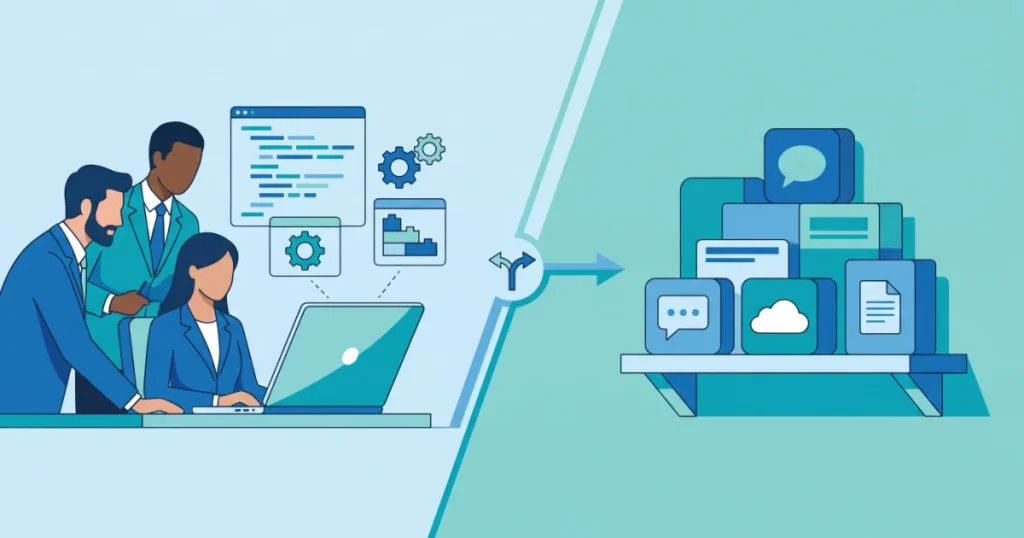
Off-the-shelf software is a ready-made product that vendors build for thousands of businesses at once. Think accounting tools, generic CRMs, or booking platforms you can sign up for today and start using in minutes. Custom software development means a team builds something specifically around how your business actually works, from the ground up.
Neither option is “better” in general. It genuinely depends on your business stage, your budget, and how unusual your day-to-day operations are. Anyone who tells you one option is always right is trying to sell you something.
In our experience, the businesses that get burned are the ones who pick based on price alone, without thinking about where they’ll be in two or three years. A tool that fits perfectly today can quietly become the thing slowing your whole team down once you scale past a certain point.
When Off-the-Shelf Software Makes Sense
Honestly, most small businesses should start here. There’s no shame in it, and it’s usually the smarter first move.
Still Figuring Out Your Process?
If you’re still figuring out your exact processes, locking them into expensive custom software too early is a common mistake. Use a ready-made tool first. Learn what actually works for your team, then revisit custom development once your operations settle down.
Running a Fairly Standard Process?
Invoicing, basic inventory tracking, email marketing, appointment booking — these are solved problems. Dozens of solid, affordable tools already do this well. Building your own version from scratch here is usually just reinventing the wheel.
Need Something Live This Week?
A custom build takes time, even for a simple project. If you need a working system next week, not next quarter, an off-the-shelf tool is the only realistic option.
When Custom Software Development Is Worth It
This is where things get interesting, and where we’ve seen businesses genuinely transform once they make the switch.
Your Workflow Is Genuinely Unique
We worked with a logistics company in Dubai whose delivery routing process didn’t fit into any existing platform without heavy workarounds. Every “flexible” off-the-shelf tool they tried still forced them to bend their process to fit the software, instead of the other way around. That’s usually the clearest sign a tailor-made system is the right call.
You’re Paying for Multiple Tools to Do One Job
If your team is stitching together four or five different apps with spreadsheets and manual copy-pasting in between, you’re already paying the “custom” price in wasted hours. You’re just not getting a system that’s actually built for you.
Data Security or Compliance Is Non-Negotiable
Healthcare, finance, and certain government-adjacent sectors in the UAE often have specific data handling requirements that generic software simply can’t meet. Building your own system gives you full control over exactly how you store, encrypt, and access data.
The Real Cost Comparison (Not Just the Sticker Price)
This is the part most business owners get wrong, because they only compare the upfront number.
Upfront Cost
Off-the-shelf software almost always wins here. You’re usually looking at a monthly subscription instead of a development project, so the initial cash outlay is far smaller.
Long-Term Cost
Here’s where it flips. Subscription costs scale with your team size and usage, often quietly, and you’re paying indefinitely for features you may never fully use. A tailored build has a bigger upfront investment. But you own the system outright, and it scales with your actual needs instead of a vendor’s pricing tiers.
A Quick Example
A retail business paying $400 a month across three different SaaS tools is paying roughly $4,800 a year, every year, forever. A custom-built system covering the same functions might cost more upfront. Often, though, it pays for itself within two to three years. After that, it’s essentially free to run beyond hosting and maintenance.
A Simple Framework to Decide
Before you commit either way, run through this quickly:
- Is your process genuinely different from how most businesses in your industry operate?
- Are you already paying for three or more tools trying to cover the same workflow?
- Do you have specific data, security, or compliance needs a generic tool can’t meet?
- Can your business comfortably wait a few months for a build, or do you need something live immediately?
- Is this workflow central to your business, or a side process you just need to function?
If you answered yes to two or more of the first three questions, custom software development is worth seriously exploring. If most of your answers point the other way, stick with off-the-shelf for now and revisit this later as you grow.
If you’re not sure which side you land on, our IT services team can walk through your current setup and give you an honest read. We’ll tell you whether a custom web app or an ERP-style system actually makes sense for where your business is right now.
Common Use Cases We See Across the UAE
To make this less abstract, here’s where custom builds tend to show up most often in our work with local businesses.
Retail and E-Commerce
Businesses running both a physical store and an online shop often need inventory, orders, and loyalty programs talking to each other in real time. Generic platforms can do parts of this, but rarely all of it cleanly. That’s where a tailored system starts to pay off.
Real Estate
Property listings, tenant management, maintenance requests, and payment tracking each have their own quirks depending on how an agency actually operates. A system built around your specific leasing process tends to save far more admin time than a generic property management tool.
Healthcare and Clinics
Appointment booking, patient records, and insurance workflows in the UAE often need to follow specific local regulations. Off-the-shelf clinic software built for another market doesn’t always translate well. That pushes many clinics toward a purpose-built solution.
Frequently Asked Questions
How long does custom software development usually take?
It depends heavily on scope. A focused business tool typically takes 6 to 16 weeks from planning to launch. Larger systems covering multiple departments can take longer, which is why starting with a clear, prioritized scope matters.
Is custom software more expensive than off-the-shelf tools?
Upfront, almost always yes. Over three to five years, it often works out cheaper. This is especially true once you factor in growing subscription costs and the productivity lost to workarounds that off-the-shelf tools force on unique workflows.
Can custom software integrate with tools we already use?
Yes, this is actually one of the biggest advantages. A custom build can connect directly with your existing accounting, CRM, or communication tools, instead of forcing your team to switch everything at once.
What happens if our business needs change after the software is built?
Because you own custom software outright, you can update and extend it as your business evolves. This is different from off-the-shelf tools, where the vendor limits you to whatever features they decide to build next.
Do small businesses actually need custom software, or is it only for large companies?
Plenty of small businesses in the UAE benefit from it, especially once they’re juggling multiple disconnected tools. It’s less about company size and more about how unique and central the workflow in question is to your business.
Final Thoughts
There’s no universally “right” answer here, only the right answer for where your business is today. Start with off-the-shelf if you’re early-stage or your needs are fairly standard. Move toward custom software development once you notice your team constantly working around your tools instead of with them.
If you want a second opinion on which path fits your business, get in touch with our team. We’ll give you a straight answer, not just a pitch for whichever option happens to be more profitable for us.