
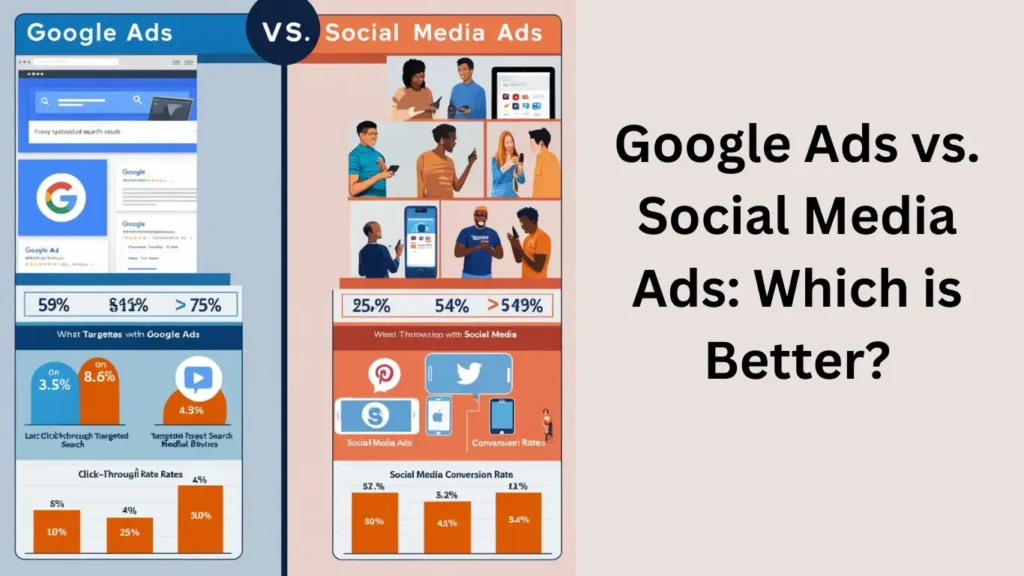
Choosing between Google Ads and Social Media Ads isn’t easy. Both are powerful platforms but work very differently, just like comparing a Swiss Army knife with a chef’s knife. Each can deliver exceptional results when used for the right purpose.
In this guide, we break down how each platform works, who they’re best for, and how to decide the right mix for your business.
1. Where Are Your Ideal Customers? (Intent Matters)
The toughest part of digital advertising is finding your audience, and Google Ads and Social Media Ads have different ways to approach this.
Google Ads = High Intent
Google Ads show your ad to people actively searching for something right now.
For instance, when someone searches for “best organic dog food for sensitive stomachs,” they’re ready to buy. Your ad appears at the exact moment of need.
Best for:
Businesses utilizing high-intent keywords
Lead generation
Immediate sales
Local services
Social Media Ads = Interest-Based Discovery
People on Facebook, Instagram, or LinkedIn aren’t on active searches; they scroll. You catch them with content that aligns with their interests, behaviors, or lifestyle.
Here, you’re not targeting intent-you’re creating it.
Best for:
Brand awareness
Storytelling
Reaching wider audiences
Building communities
Key difference:
Google Ads = explicit intent (“I need this now”)
Social Media Ads = latent intent (“This looks interesting”)
2. Budget Battle: Which Platform Gives Better ROI?
While both systems use PPC, or pay per click, the competition and price structures differ.
Google Ads
Competitive keywords may be very expensive.
Requires bid management & continuous optimization
Excellent for tracking direct conversions
Example:
A client of ours selling artisanal soap had a high CPC to begin with, which then came down with refined targeting and better copies.
Social Media Ads
More flexible budgets
Costs are greatly determined by creativity & engagement.
Can generate big results even with smaller budgets
If your visuals & story connect with your audience, you can see amazing returns even with modest spending.
3. Measuring Success: Numbers That Actually Matter
Google Ads Metrics
Clicks
Conversions
CPA (Cost Per Acquisition)
ROI
Google is simple: track what people searched, clicked, and bought.
Social Media Metrics
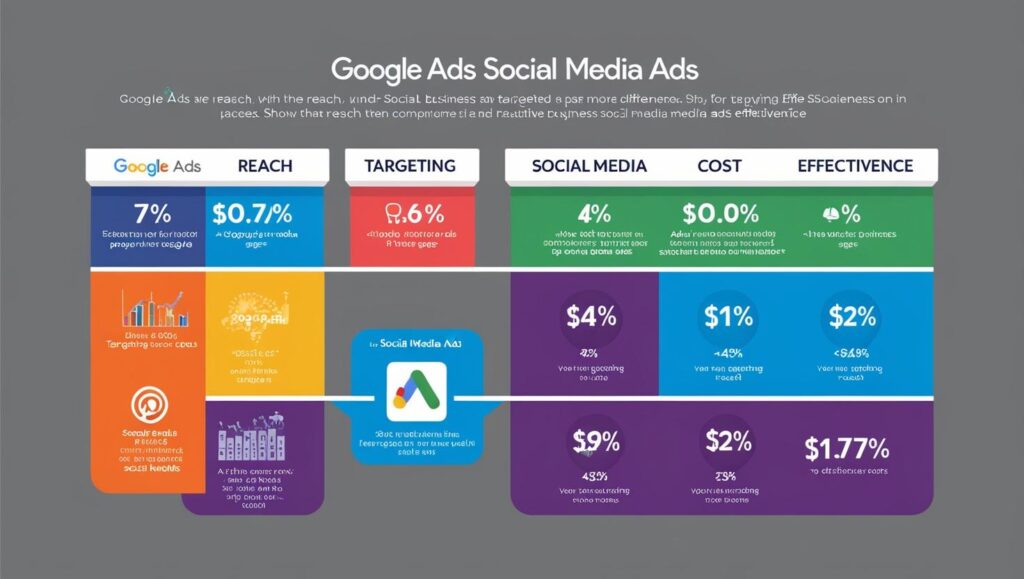
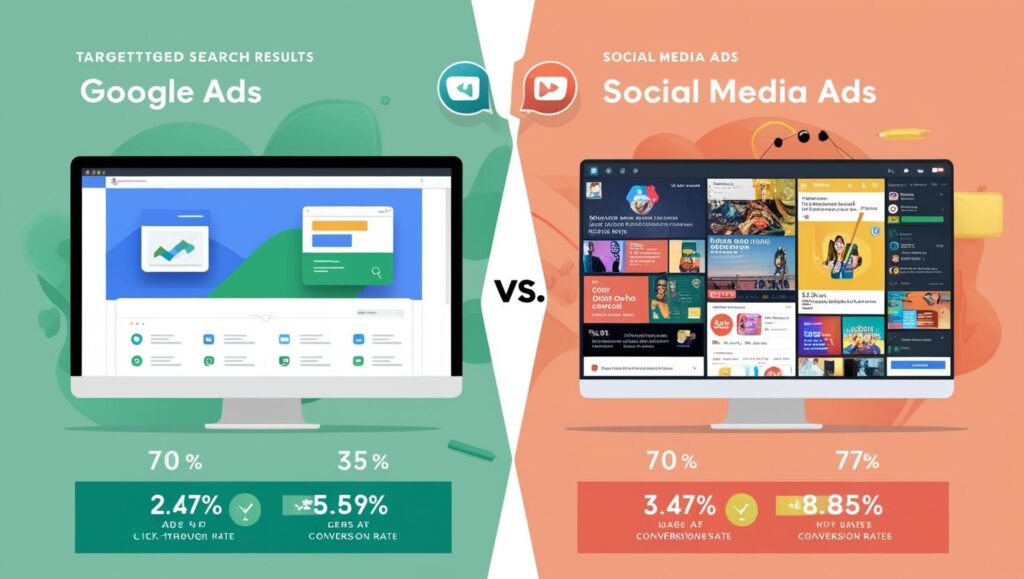
Reach
Engagement (likes, comments, shares)
View time
Brand awareness
Lead quality
It’s a slow-burn strategy, like planting a tree. You see long-term brand growth and not instant sales.
4. Creative Control: Show vs. Tell
Google Ads
Short text advertisements
Occasional images or videos
Focus: clarity, precision, and strong CTAs
Social Media Ads
Videos
Stories
Reels
Carousel creatives
Branded visuals
Emotional storytelling
If you want to express your brand personality both visually and emotionally, social media wins.
5. The Final Verdict: You Don’t Have to Choose
It is not Google Ads OR Social Media Ads.
It means Google Ads AND Social Media Ads-used strategically.
Google Ads is especially strong in:
✔ Capturing ready-to-buy customers
✔ driving instant sales
✔ high-intent leads
Social Media Ads excel at:
✔ branding building
✔ Lead Nurturing
✔ creating long-term loyalty
When you put these two together, you have the entire spectrum from awareness through conversion.
Conclusion
The “best” platform depends on:
Your business objectives
Your audience
Your budget
Your creative resources
Test, analyze, and adapt. The right blend will help your business scale faster and more efficiently.
Top 15 SEO FAQs for Google Ads vs Social Media Ads
1. Which is better: Google Ads or Social Media Ads?
Neither is universally better. Google Ads captures high-intent buyers already searching for solutions, while Social Media Ads build awareness and attract users based on their interests. The best platform will depend on your goals.
2. Is Google Ads more expensive than Social Media Ads?
Because of keyword competition, Google Ads can be more expensive; however, it often delivers faster conversions. Social Media Ads usually boast lower CPCs but may require consistent creative testing.
3. Which one yields quicker results?
Google Ads are generally faster because the system targets users who are looking to buy, whereas Social Media Ads focus more on awareness and engagement and might take more time to convert.
4. Can I run both Google Ads and Social Media Ads together?
Yes, because you then have a full-funnel strategy: Google captures intent, and social media builds brand awareness.
5. Which ad platform is better for small businesses?
Small businesses benefit with the low friction and cost of starting with Social Media Ads, supplementing Google Ads for high intent leads as the budget grows.
6. Are Social Media Ads good for lead generation?
Yes, Facebook, Instagram, and LinkedIn have powerful lead generation formats, particularly when one makes use of engaging visuals and well-defined audience segments.
7. Do Google Ads work for brand awareness?
Yes, but they work better for conversions. Social Media Ads tend to be stronger at brand awareness campaigns.
8. How do I know which ads platform my audience uses?
Analyze your customer’s behavior: Search-heavy industries → Google Ads Lifestyle, visual, and engagement-based niches → Social Media Ads
9. Which one provides superior targeting?
Google provides intent and keyword-based targeting. Social media provides demographic, interest, and behaviour targeting. Both excel in different ways.
10. Are Social Media Ads cheaper than Google Ads?
Usually yes. CPC tends to be lower, while returns depend on the creative quality and audience relevance.